CBCT Scan in London — Cone Beam CT Imaging at Harley Street
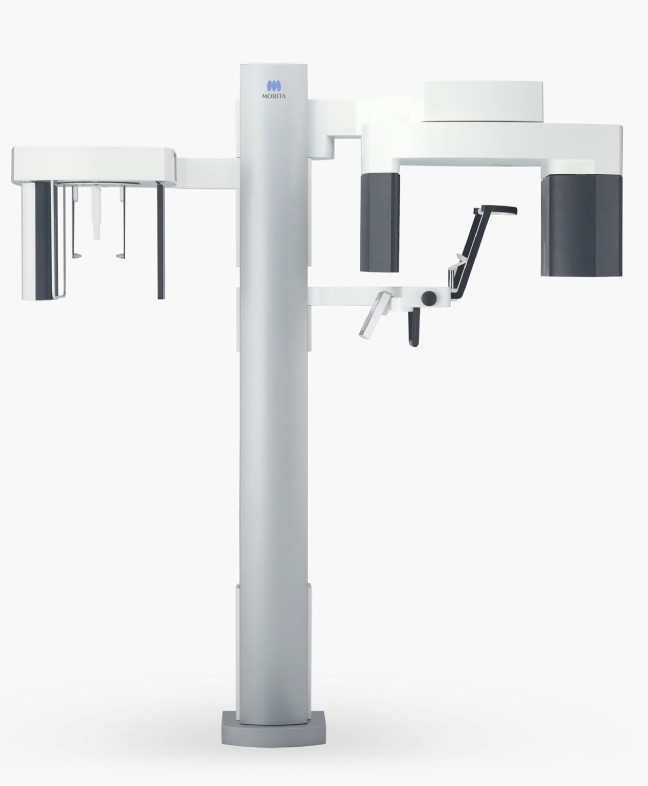
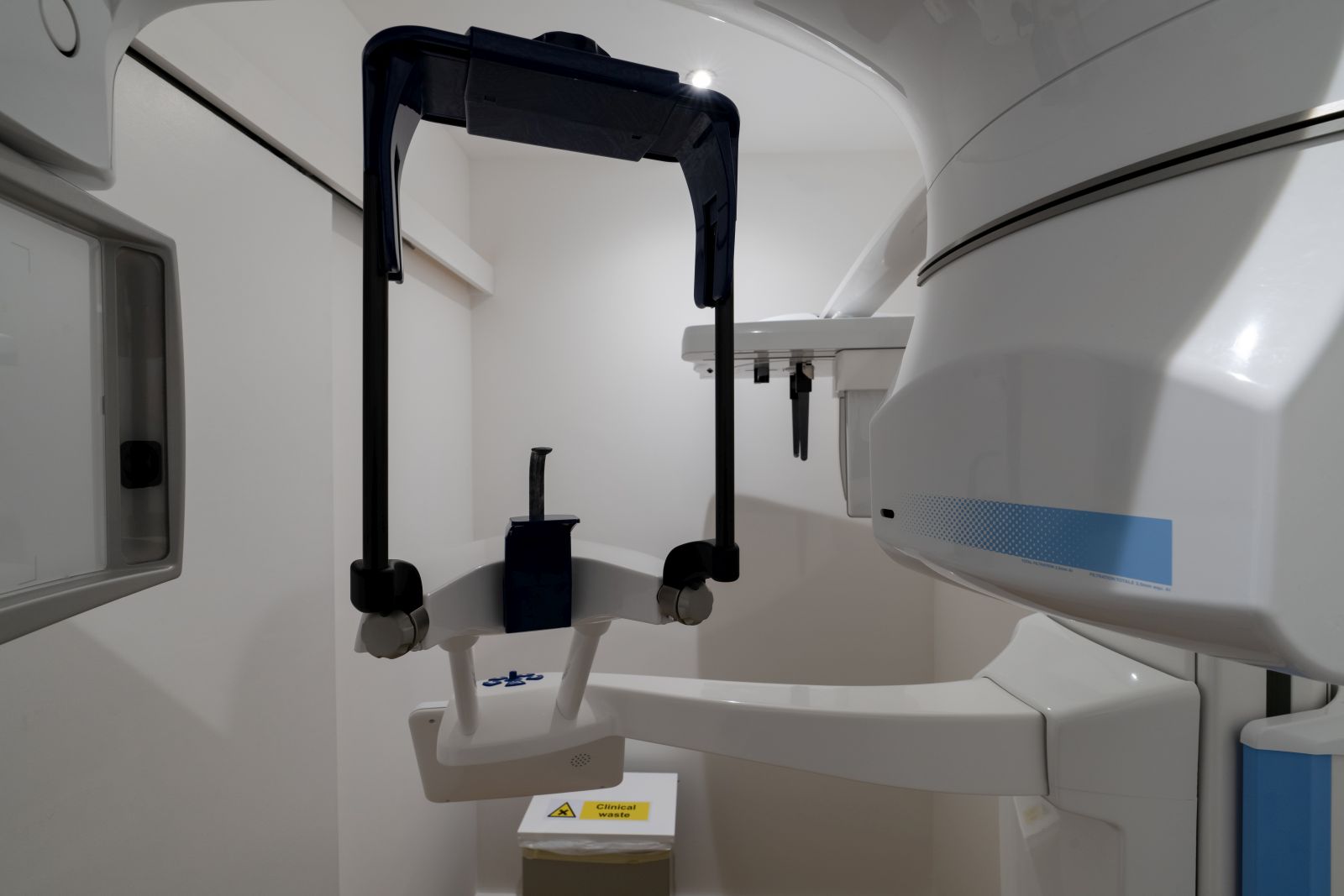
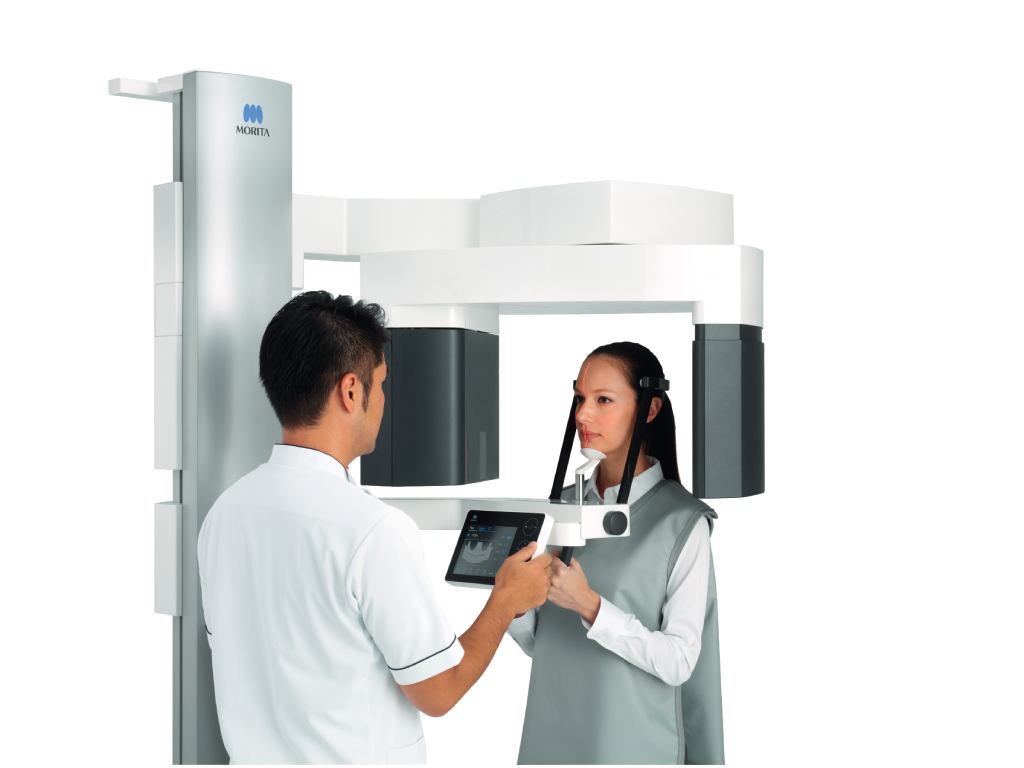
Our Morita X800 and Planmeca Promax 3D CBCT scanners are the best-in-class cone beam CT imaging machines, capable of producing incredibly detailed internal views of the mouth, face, jaws and cervical spine. A CBCT scanner uses very low doses of radiation to produce amazing 3D images of the teeth and the surrounding structures. Unlike traditional X-rays, CBCT scanners can distinguish between different types of tissue and this enables your surgeon/dentist/doctor to see structures in greater detail and from a greater variety of angles.
What are the benefits of a CBCT scan?
Our state-of-the-art Cone Beam Computed Tomography (CBCT) scanning service offers you a choice between two industry-leading machines: Planmeca CBCT and Morita CBCT. Each machine brings unique advantages tailored to your specific diagnostic needs, ensuring you have the tools you require to deliver the highest quality patient care.
Planmeca CBCT Machine: Precision and Versatility
-
Ultra-Low Dose Imaging: Patient safety is paramount, and the Planmeca machine prioritises this with its ultra-low dose imaging technology. You can confidently perform scans while minimising radiation exposure, ensuring the well-being of your patients without compromising diagnostic quality.
- Large FOV (field of view): Our Planmeca 3D Mid model enables us to take very extensive field of view scans measured at 20cm x 17cm, used in orthognathic or jaw surgery, facial feminisation surgery, PEEK implants, overbite/underbite surgery.
-
Intuitive Software Integration: The accompanying Planmeca Romexis software works on both Windows PC and Apple Mac OS, enabling efficient image manipulation, measurement, and sharing. Additionally Romexis has full implant planning feature, free of charge!
Morita CBCT Machine: Best-in-class for Endo scans
The Morita CBCT machine is a testament to innovation and reliability in the field of dental imaging, offering features that elevate your diagnostic capabilities:
- Multiple Field of View Options: With various field of view options, ranging from focused views to comprehensive scans, the Morita machine adapts to your clinical needs. Whether you're assessing a single tooth or the entire maxillofacial region, you have the flexibility to obtain the precise image you require.
- Very High Image Quality: Morita CBCT machines are known for their high-resolution imaging capabilities. When performing endodontic CBCT scans, capturing detailed and precise images of root canals, canal morphology, and periapical regions is crucial. Morita CBCT's superior image quality aids endodontists in accurately diagnosing and planning treatments.
When it comes to modern dental care, technology has revolutionised the way we diagnose and treat oral health issues. One remarkable advancement in this field is the use of implant Cone Beam Computed Tomography (CBCT) scans. These scans provide invaluable insights that enable dental professionals to offer precise and personalised implant procedures, ensuring a comfortable and successful experience for patients.
What is CBCT Scanning?
CBCT scanning is a cutting-edge imaging technique that allows dentists and surgeons to create detailed 3D images of your jaw, teeth, and surrounding structures. Unlike traditional 2D X-rays, CBCT scans provide a three-dimensional view, which significantly enhances the accuracy of diagnosis and treatment planning. This is especially crucial for dental implant procedures, where precision is key to achieving optimal results.
Benefits for Patients:
-
Accurate Planning: CBCT scans allow your dentist or surgeon to assess the quality and quantity of bone in your jaw, determining the best location and angle for implant placement. This precision reduces the risk of complications and ensures a stable foundation for your new tooth.
-
Minimised Discomfort: With traditional imaging methods, multiple X-rays might be necessary to capture the required information. Implant CBCT scanning reduces the need for these additional exposures, leading to a more comfortable experience for patients.
-
Customised Treatment: Every patient's anatomy is unique. CBCT scans enable your dentist to tailor the treatment to your specific needs, ensuring a better fit and more natural-looking result.
-
Enhanced Communication: The detailed images provided by CBCT scans allow your dentist to explain the treatment plan more effectively. You'll have a clearer understanding of the procedure, which can help alleviate any concerns you might have.
-
Time Efficiency: Cone-beam CT scans are quick, often taking only a few minutes. This saves you time while still providing the necessary information for a successful implant procedure.
Ensuring Your Safety:
Your safety is a top priority. Implant CBCT scans use a lower dose of radiation compared to traditional medical CT scans. Additionally, your dentist/doctor will consider your medical history and any existing conditions before recommending the scan.
Preparing for Your CBCT Scan:
-
Clothing: Wear comfortable clothing, preferably without metal buttons or zippers, to ensure accurate imaging.
-
No Special Diet: You can eat normally before the scan unless your dentist instructs otherwise.
-
Remove Jewellery: Any jewellery or accessories around your head and neck area should be removed before the scan.
What are CBCT scanners used for?
CBCT is the gold standard imaging method in dentistry, maxillofacial (Maxfax) surgery, ENT and upper cervical chiropractic for indications such as:
- Dental implant planning and placement
- Airway sleep disorders such as sleep apnoea
- Diagnosis and detection of infections and tumours
- Ear Nose and Throat investigations
- Nasal anatomy: septum, turbinates and sinus study
- Oral surgery, orthognathic surgery, jaw and face surgery and wisdom teeth extractions
- Facial and tooth fractures
- TMJ (temporomandibular joint disorder) diagnosis and evaluation
- Complex endodontic cases, high resolution root canal treatment
- Orthodontic treatment
- Periodontal disease
- Upper cervical chiropractic treatment
Advantages of CBCT scans
- Better image quality and accuracy, CBCT scans can focus in on a specific spot, allowing dentists to examine an area that is small as a single tooth’s root (4cm x 4cm).
- Unlike traditional dental X-rays, the CBCT scan can show tissues easily in 3D, this allows the medical professional to form a more precise treatment plan.
- CBCT uses lower dose of radiation than a conventional CT scan (7-10 times less!)
Temporomandibular Joint (TMJ) CBCT scan
Although the clinical examination is the most important step in the diagnosis of TMJ pathology, a TMJ 3D CBCT scan (cone beam CT) is needed due to the complex anatomy and pathology.
It is very common to take an image of the joint when there is locking, pain and articular sounds.
One important thing to consider when imaging the TMJ is the interpretation of the joint function, which can be accomplished by comparing the condyle in the closed and opened mouth position.
Frequently Asked Questions
The scan itself typically takes between 10 and 40 seconds depending on the field of view required. Your total appointment at our Harley Street centre, including preparation and positioning, is usually completed within 15 minutes.
Yes. CBCT uses significantly less radiation than a conventional medical CT scan — approximately 7 to 10 times less. All scans at 3Beam are clinically justified and performed by HCPC-registered radiographers in accordance with IR(ME)R 2017. We operate two industry-leading machines — the Morita X800 and the Planmeca Promax 3D — both of which are designed to minimise radiation dose without compromising image quality.
Yes. A referral from a registered dental or medical professional is required. If you are a dentist, orthodontist, oral surgeon, or other healthcare professional, you can register on our portal and refer patients directly online. If you are a patient, please ask your treating clinician to refer you.
We have two machines available — the Morita X800 and the Planmeca Promax 3D. The choice depends on your clinical indication. The Morita is best-in-class for high-resolution endodontic scans, while the Planmeca is preferred for larger field of view cases such as orthognathic surgery, facial feminisation, and implant planning. Your referring clinician can specify a preference, or our radiographers will select the most appropriate machine.
CBCT is used across dentistry, maxillofacial surgery, ENT, and chiropractic for a wide range of indications including dental implant planning, complex endodontic cases, TMJ assessment, airway and sleep apnoea evaluation, wisdom tooth assessment, jaw and facial fractures, sinusitis, periodontitis, periapical abscesses, and orthodontic treatment planning.
The Planmeca Promax 3D offers an extra-large field of view (20cm x 17cm), making it ideal for full-jaw, orthognathic, and maxillofacial cases. It also includes integrated implant planning software at no additional charge. The Morita X800 is recognised for exceptional image resolution in smaller fields of view, making it the preferred choice for endodontic cases where fine detail of root canal morphology is critical.
CBCT images are typically available to your referring clinician via our secure online portal on the same day. If a formal radiology report has been requested, turnaround times will be confirmed at the time of booking.
We advise all patients to inform us if they are pregnant or think they may be pregnant before their appointment. Each case is assessed individually in line with IR(ME)R 2017 guidelines.
We are based at 86 Harley Street, London, W1G 7HP. The clinic is a short walk from Regent's Park (Bakerloo line) and Bond Street (Central and Jubilee lines) underground stations.